




Many believe that once a trademark is registered, it enjoys permanent protection. However, in trademark practice, we frequently encounter situations where long-standing marks are ultimately lost because they were not used in accordance with statutory requirements.
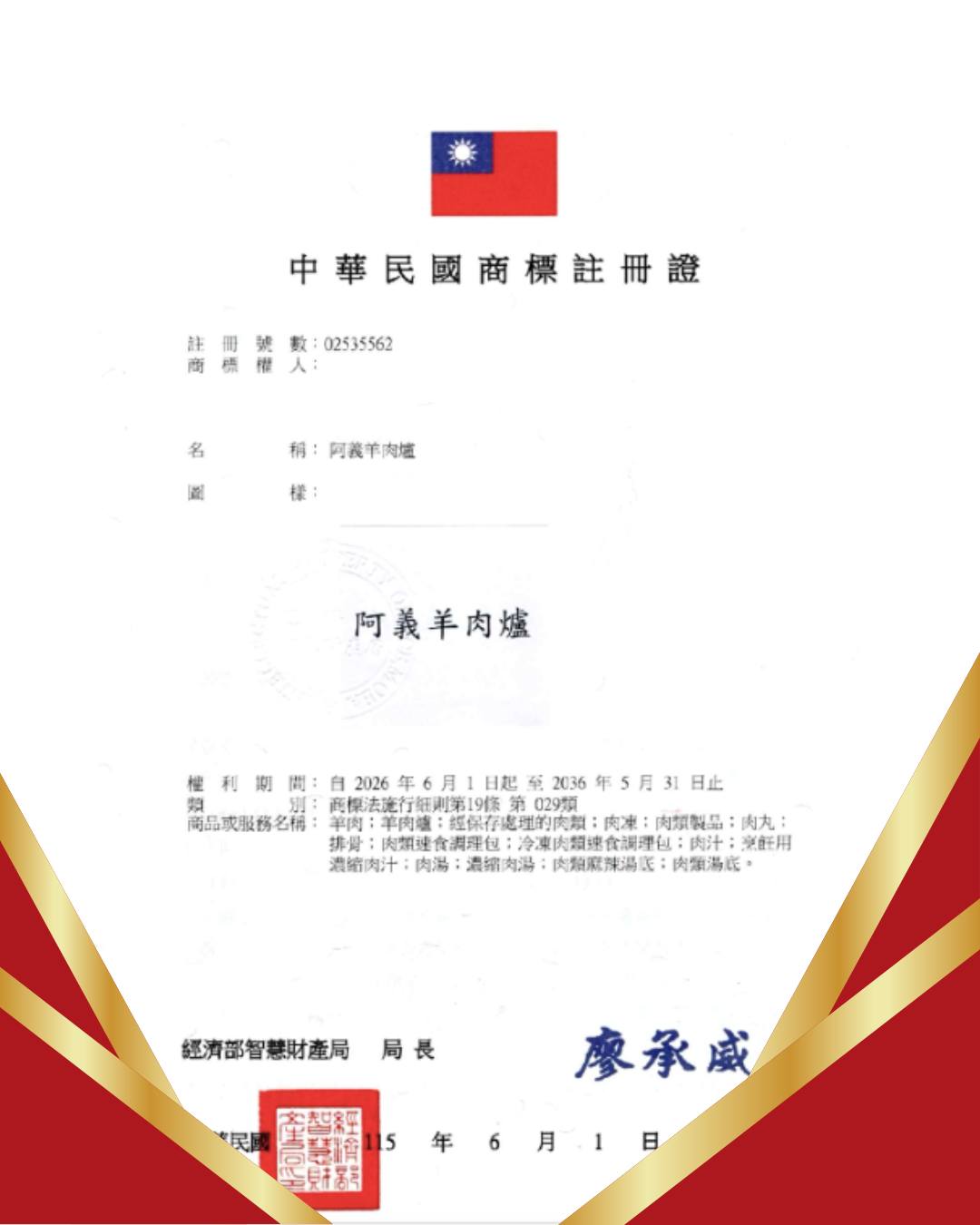
The “A-Yi Lamb Hot Pot” case, represented by Jun Rui IP, serves as an excellent illustration. When the client applied for registration, the Taiwan Intellectual Property Office (TIPO) issued an Office Action (Refusal) citing a conflicting prior registered trademark, which blocked the application.
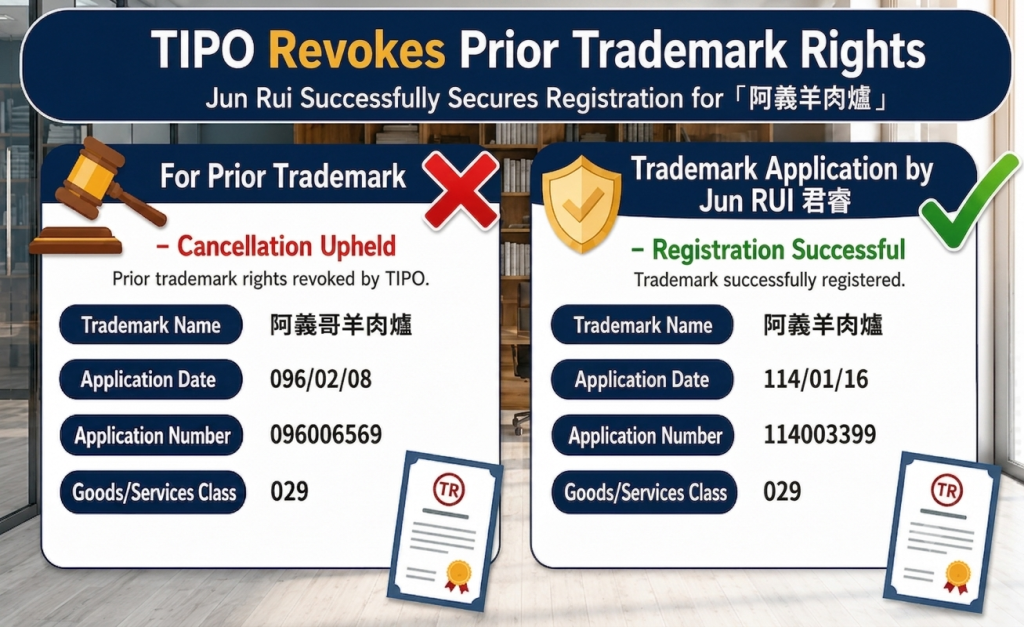
Upon taking over the case, we looked beyond the surface of the refusal and conducted a thorough investigation into the actual commercial use of the cited prior mark. Through market research, usage analysis, and extensive evidence gathering, we discovered that despite the prior mark’s 20-year history, its manner of use and available evidence failed to meet the statutory standards required by the Trademark Act. Consequently, there were strong grounds to file a Trademark Cancellation Petition.
Over the following months, we diligently organized evidence, conducted legal analysis, and formulated arguments. Ultimately, the IPO sustained the cancellation and revoked the prior trademark registration. “A-Yi Lamb Hot Pot” successfully overcame the refusal and secured its trademark registration.
This case serves as a crucial reminder that the greatest risk to a trademark does not always lie in the application stage, but rather post-registration. Even if a mark has been used for years, failure to comply with legal compliance or lack of sufficient and valid evidence of use exposes it to the risk of cancellation or revocation.
Therefore, companies must prioritize subsequent trademark management and maintenance strategies alongside filing, such as:
- Preservation of Trademark Use Evidence
- Brand Licensing Management
- Trademark Identity Consistency Control
- Trademark Use Auditing Systems
- Trademark Rights Enforcement Strategies
At Jun Rui IP, we always emphasize to our clients: The real value is not the certificate on the wall, but whether the brand is continuously, correctly, and fully protected. In addition to prosecution, oppositions, invalidations, and cancellations, we provide IP corporate training to help businesses establish proper usage concepts and minimize future litigation risks. Every successful registration is a strategic battle for brand protection.
“Trademark registration is not the end, but the beginning of brand protection.”